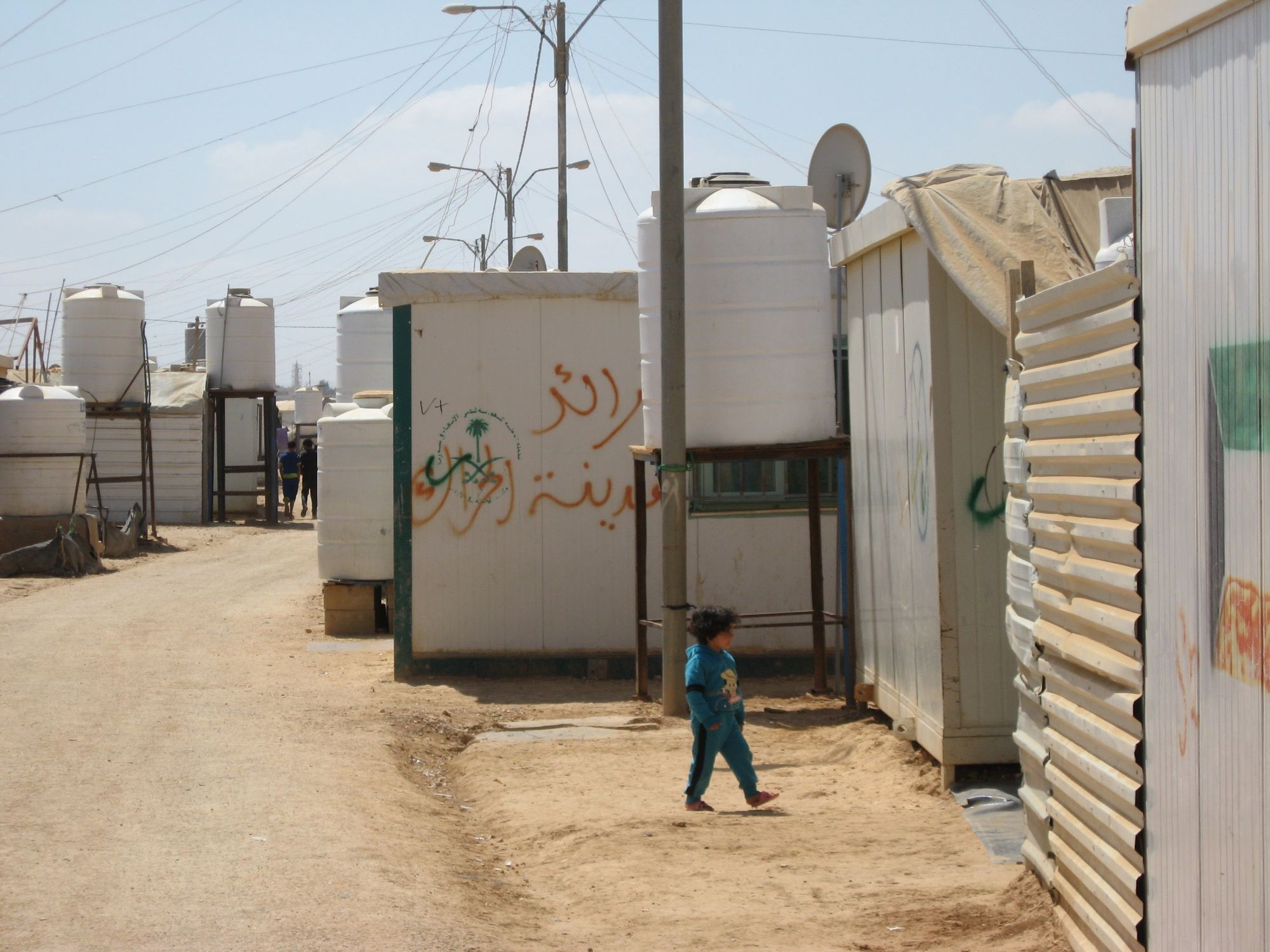
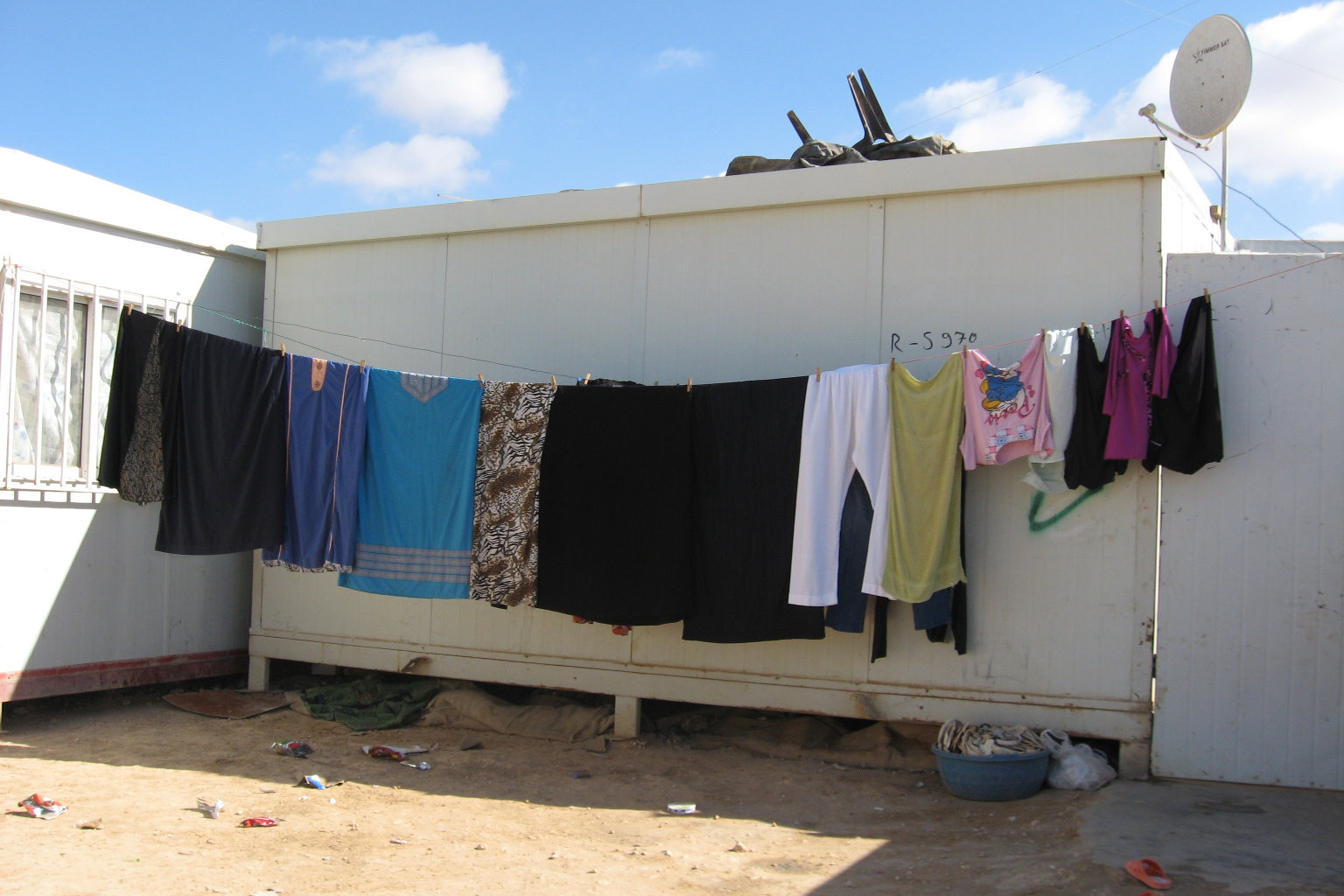
By now, things have gotten relatively routine for me at the Zaatari refugee camp[1]. The security guards at the camp's entrance now know us pretty well, as do basically all the employees at the AMR clinic. With only 3 days left in my trip, I'm frantically trying to squeeze in as much as I can before we leave. Today it's the 4th of Ramadan, and the number of patients is back to usual.
Today, I worked with Dr. Abdussalam, a pediatrician and a real character. Starting with the first patient, his methods proved to be very different than what I was used to, especially for pediatrics. Essentially, as soon as the patient comes into the room, he starts prompting the parent rapidly and assertively to quickly diagnose and triage patients. He wastes no time in getting the patient history, symptoms, and everything he needs as if his life counted on it.
If you were to describe Dr. Abdussalam with one word, it would be boisterous. He's also humorous and even a little aggressive with patients, but only to the point of acting fatherly. It's hard to give a personality to a name, but you simply can't talk about Dr. Abdussalam without thinking of his passion and enthusiasm. Even while he's fervently quizzing parents in the exam room, his smile is overwhelming.
Dr. Abdussalam also works at the Emirati hospital in the camp Su-Th, and only comes here on Saturdays. A the Emirati hospital, they have a real triage system with nurses taking temperature, weight, etc ahead of the doctor's visit, whereas here he just takes patient's word for having a fever because there aren't any quick thermometers.
Differences in Medical Care
Dr. Abdussalam has a pretty different outlook to medicine than basically all physicians in the US, and part of it is having to work in a refugee camp. He prefaced many of his explanations with the phrase, "well, there's only so much you can do in a refugee camp," and it's hard to blame him. I've only spent 3 weeks here and I can already attest to the dire need of the patients that come here every day.
Dr. Abdussalam is extremely time conscious in his treatment. For example, he always uses a tongue depressor for his throat inspection, and the same was true with other Syrian doctor that I shadowed. The American pediatricians on the other hand always try asking the nice way, and only use the tongue depressor when needed - definitely much slower. When a patient has a chronic or repetitive illness, he repeats meds identically if they worked before for the patient and does a more cursory clinical exam.
Here in the camp, there are a lot of breathing related problems, mostly asthma due to the dust storms and smoking that are both rampant in the camp. Whenever a patient has wheezing in the lungs, the doctor always asks if there is smoking at home. When they answer with the affirmative, he tells them to quit or do it outside - forcefully. Not surprisingly, the doctor prescribes ventolin (albuterol) instead of the more commonly prescribed loratadine for asthmatic patients.
"You Americans do studies, here we operate on trust"
There was a patient with meningococcal meningitis. He came in Kernig sign extremely visible. I asked the doctor whether they gave meningitis vaccines, and he said they do, but appended it with the following:
Last, we saw an older infant with hydrocephalus today as well, which makes it the second case in a week. Based on my research, hydrocephalus is basically nonexistent in the US due to early preventative care, which is extremely difficult to obtain in the Zaatari.
Medications
One aspect that Dr. Abdussalam has a radically different attitude about is prescribing medications. On average, he prescribes 3-4 medications per patient even when they don't need it, and acknowledges that he's overprescribing to the patient. However, the majority of additional medications he prescribes are available over the counter (OTC) in the US, but are not available widely or cheaply in the camp, so there is hardly any risk there.
Other times, he prescribes medications to be safe rather than sorry, as in the case of a giardia infection. The clinic does not have any tests for it, so he prescribes flagyl when there are some symptoms that point to giardia but is not conclusive. For gastroenteritis, he always assumes it is a bacterial infection and writes the patient azithromycin most of the time. If there's any breeding ground for superbugs, it's here in the Zaatari camp.
"Scientifically, we shouldn't be doing this, but practically we should"
In fact, Dr. Abdussalam undermines the authority of other doctors who prescribe less, presumably to have the patients trust him. Many of the medications he gives are basically placebos and don't do much to address the patient's symptoms, like apisal for a URI. Other times, he writes prescriptions without an exam for relatively obvious syndromes like diaper rashes (panderm) or worm infections (vermox).
Near the end of the visit, the patients start asking the doctor exactly what medications they want, particularly when the doctor is writing the prescription. If it sounds reasonable, the doctor will throw it onto the prescription just for good measure - diametrically opposed to the American method of handing the patient their prescription with hardly any negotiation. The doctor explains that "even if there isn't anything relevant for them now, they should get some medications for it to be worth the visit - many of my patients walk 2 miles each way to see me."
Miscellanea
The doctor makes a lot of other miscellaneous medical decisions that I thought went contrary to what I'd been taught, and others made sense.
He prefers liquid medications to suppositories, which are very popular in the Middle East typically, because of possible diarrhea. He also starts using acetaminophen from day 1 for newborns, whereas the American doctor never gives it newborns before investigating what the underlying cause of the fever is.
A patient came in for treatment twice, for a bloody navel. The doctor prefers to treat the patient by rubbing iodine and keeping the umbilical cord dry than the silver nitrate treatment. Based on my research in a pediatrics textbook[2], the preferred treatment is repeated silver nitrate application. In any case, the primary reason this patient needed care is because a Vitamin K injection was never given at birth.
One point that I've noticed is that the pediatrician takes into account cultural factors heavily in his treatment. For example, he adjusts medications to be as few times per day as much as possible, especially now with fasting during Ramadan, he limits does to 2 times per day. He also does this because patients are far more compliant the fewer doses there are.
Reflections
On the way back, the fact that I had only 1 more day at the clinic sunk in. There was so much lost potential here - so many patients that could be given better care if there was better equipment, and so many bad practices that could be avoided if there was better equipment, better tests, and better medications.
On the way out, I waved goodbye in case I was unable to come tomorrow.

Home to over 100,000 Syrian refugees, in the north of Jordan. ↩︎